
 Security companies delivering alarm response services are facing increasing pressure to balance response performance, operational costs and sustainability commitments, according to Stuart Wheeler, Managing Director of Keynetics.
Writing about the challenges affecting mobile response operations, Wheeler argues that alarm response is no longer judged solely on how quickly officers attend an incident. Clients now expect faster attendance, greater accountability, comprehensive reporting and improved visibility of response activities, while providers continue to operate across larger geographic areas with limited resources.
Recruitment and staff retention remain ongoing concerns across the security sector, adding further pressure to mobile response teams already working to demanding service level agreements.
While technology has helped improve aspects of mobile response, Wheeler suggests that many operational issues stem from the way access to customer premises is managed during alarm activations. As a result, security providers are increasingly reassessing long-established keyholding practices.
Balancing Three Competing Priorities
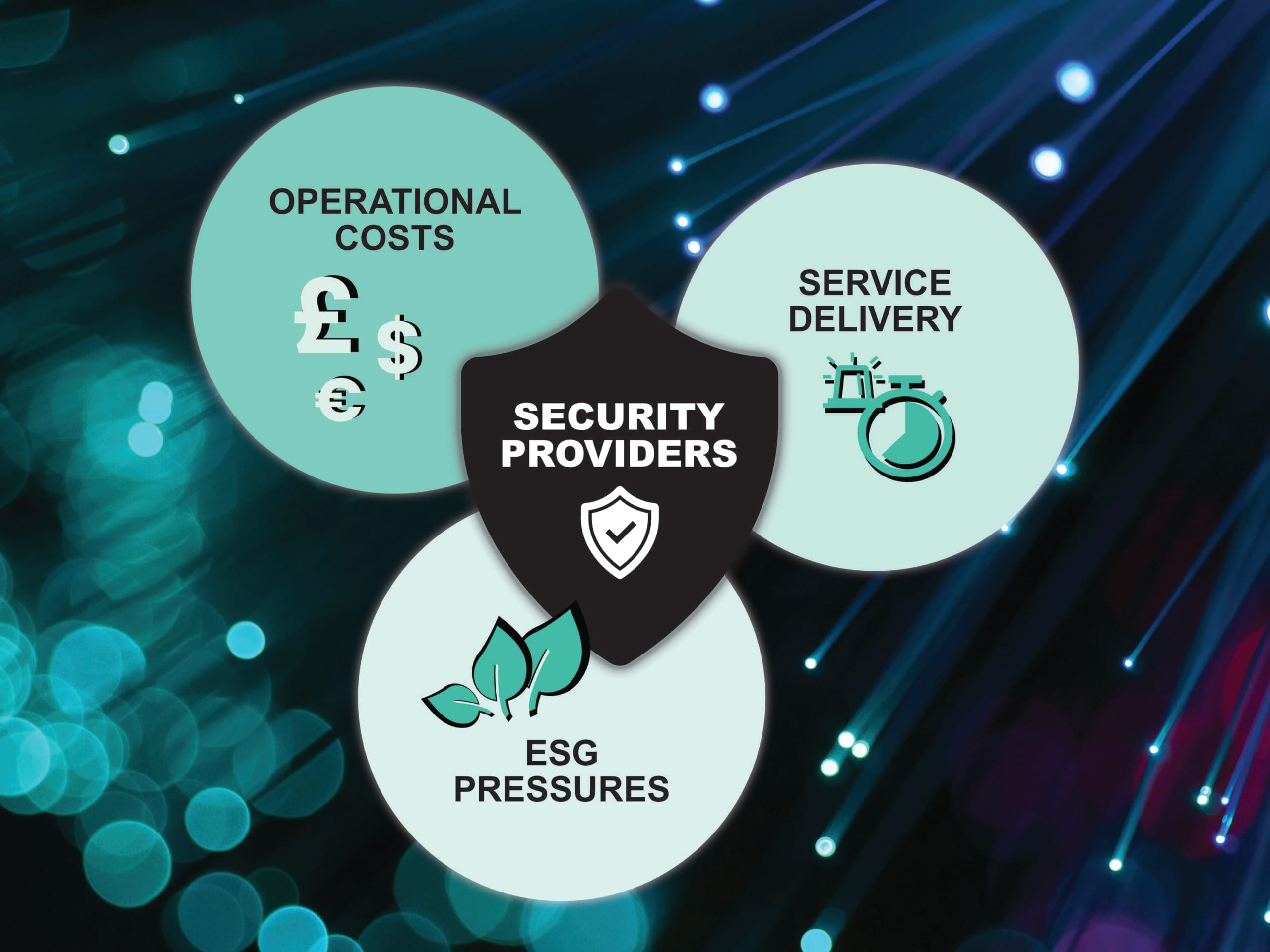
According to Wheeler, many providers are attempting to balance three operational priorities simultaneously: maintaining contractual response times, controlling operating costs and meeting environmental, social and governance (ESG) objectives.
Alarm response performance remains a key contractual measure, particularly in higher-risk environments where delayed attendance can have operational and financial consequences.
At the same time, rising costs associated with staffing, fuel, fleet management and keyholding continue to place pressure on operating margins.
ESG requirements have introduced an additional layer of complexity. Security companies are expected to demonstrate measurable improvements in sustainability, yet alarm response operations often involve high vehicle mileage, extended patrols and the transportation of secure key storage equipment.
Wheeler also notes that the social and governance aspects of ESG are becoming increasingly relevant. Tighter response targets can place additional demands on patrol officers, potentially increasing operational risk, encouraging process deviations and creating wider health and safety concerns.
The observations are based on discussions between Keynetics and security providers, mobile response teams and organisations responsible for keyholding and access management.
Carrying Keys in Patrol Vehicles
One of the most widely used alarm response models involves storing client keys in secure lockers installed within patrol vehicles. Officers can respond directly to alarm activations while carrying the keys required to gain access.
Although the model has been used successfully for many years, Wheeler highlights several operational limitations.
Only the patrol carrying a specific set of keys can attend that customer’s premises. If the relevant officer is already committed elsewhere or operating some distance away, response times may increase.
 There are also security and governance considerations. A vehicle theft, break-in or road traffic collision involving a patrol carrying large numbers of keys could affect access to multiple client sites, potentially leading to significant disruption and lock replacement costs.
Vehicle modifications required to accommodate secure key lockers can also increase vehicle weight, creating additional challenges for organisations looking to introduce hybrid or electric patrol vehicles.
Centralised Key Storage
An alternative approach involves storing keys at a secure central facility, with patrol officers collecting them only when responding to an alarm.
This model can improve governance by reducing the number of keys transported during routine patrols and simplifying auditing procedures. It may also support organisations seeking to move towards lighter vehicle fleets.
However, collecting and returning keys introduces additional journeys, increases mileage and extends the time required to attend incidents. For contracts where response times are tightly defined, these additional stages may affect service delivery.
Wheeler suggests that these operational trade-offs are prompting providers to question whether physical key movement should continue to form such a central part of alarm response.
Clients Also Face Increasing Pressure
The operational challenges associated with alarm response are also becoming more relevant to customers.
Many organisations are placing greater emphasis on Scope 3 emissions and the environmental impact of outsourced services, meaning procurement and sustainability teams are paying closer attention to how security services are delivered.
At the same time, clients continue to expect rapid attendance, competitive pricing and full accountability throughout the response process.
This places pressure on providers to reduce emissions and operating costs while maintaining service levels within response models that still depend heavily on physical keys.
Reviewing Traditional Keyholding
Wheeler believes these combined pressures are leading many organisations to reconsider operational practices that have remained largely unchanged for many years.
Historically, keyholding has often been viewed simply as one element of alarm response. Increasing demands relating to sustainability, accountability and operational efficiency are now prompting providers to examine whether existing access management arrangements continue to meet current operational requirements.
Stuart comments, “There has most certainly been a sense of urgency in addressing these challenges across the security sector. The discussion is now moving beyond alarm response itself and towards reassessing how keyholding and access management fit within the wider operational model.”
Interest in Alternative Access Management
Wheeler argues that reducing reliance on transporting physical keys could allow the nearest available patrol to attend incidents without first locating or collecting keys, potentially improving operational efficiency while reducing unnecessary vehicle movements.
Reducing the number of keys carried in patrol vehicles could also support sustainability initiatives by allowing organisations greater flexibility when adopting lower-emission vehicle fleets.
He notes that systems designed to reduce the circulation of physical keys are increasingly being considered as part of wider operational improvement strategies rather than simply as security upgrades.
However, introducing alternative approaches requires investment in technology, revised procedures, staff training and customer engagement before operational changes can be implemented successfully.
Hybrid Solutions Gain Attention
While fully digital access control systems are available, Wheeler believes many organisations managing large property portfolios are instead considering hybrid approaches that combine existing physical keys with improved access management and audit capabilities.
 Replacing access systems across hundreds of locations may not be practical or financially viable in the short term, making transitional solutions more attractive for some operators.
Stuart adds, “We are often approached by organisations seeking a hybrid approach to access control, one that continues deploying existing keys while improving visibility and operational control around how access is managed.”
He continues, “The discussion is no longer simply about eliminating keyholding challenges. Organisations are also looking at auditability, integrations, remote management and futureproofing alarm response processes as operational requirements continue evolving.”
Operational Efficiency Becomes the Focus
Wheeler concludes that while traditional keyholding will continue to play a role across much of the security sector, the operational demands placed on alarm response services are changing the way providers assess efficiency.
Rather than focusing solely on response times, organisations are increasingly considering how access management, sustainability and operational performance work together as part of the overall delivery of mobile response services.
As providers continue to balance contractual obligations, rising operating costs and ESG requirements, access management is expected to become an increasingly important factor in the future development of alarm response operations.